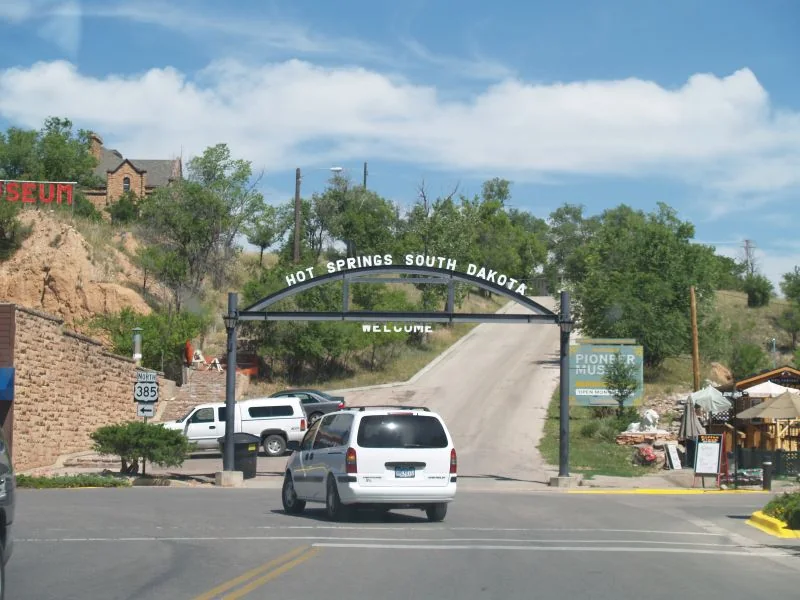

For a Hot Springs homeowner, wildfire questions can involve a developed town lot, a residence near a slope or a property farther out along a rural road. Those settings should not be collapsed into one description. A photograph of the southern Black Hills introduces the place, but an insurance submission must show the particular building and its surroundings.
If coverage is uncertain, start with the carrier's written concern and the date action is needed. Then build a current account of construction, occupancy, repairs and adjacent vegetation. A specialist agent can use that information to review alternatives without promising that any specific company will accept every property in the area.
The Green Acres Fire provides a specific local lesson
Fall River County's March 2025 Green Acres Fire archive documents an incident southwest of Hot Springs. Its updates describe changing evacuation areas and restrictions around Cascade Road and nearby residential roads. The practical lesson is that access and official instructions can change within the same event.
Those road references are historical, not instructions for leaving during a future fire. Do not save an old evacuation map as though its boundaries will apply again. Establish how you will receive current directions, and keep essential items ready before an incident develops. An insurance article cannot determine which road will be usable at that moment.
The archive also distinguishes successive incident updates from a later summary. That is useful when discussing property history: match a document to its date and address. A fire in the broader Hot Springs area does not mean your house had a claim, and a past containment report does not describe today's conditions.
Town properties and rural boundaries need different photographs
For a house in the developed part of Hot Springs, include nearby structures, fences, porches and any detached garage. For a property where pine, shrubs or grass meet the maintained yard, photograph that transition from several sides. The point is to make the setting understandable, not to assign an unsupported risk label to a neighborhood.
On a sloping lot, show where a deck projects above the ground and what is stored underneath it. On a more open parcel, include the relationship between the residence, pasture and outbuildings. A distant landscape image can miss combustible material immediately beside the building. Close views and wider context work best together.
Before changing vegetation outside your yard, identify the owner and relevant rules. Work on public land or neighboring property requires appropriate authorization. A coordinated project may be useful, but it should be documented separately from the work you have already completed around your house.
Fall River County offers unusually useful planning links
The county Emergency Management page connects residents with alerts, fire-district mapping, fire history and preparedness resources. It also identifies the Black Hills Fire Protection District boundary in relation to the Cheyenne River. These are useful starting points for confirming the rules and agencies relevant to a property.
Do not assume that one set of public-land restrictions answers a question about your private lot. County, city and federal notices can differ in scope. Ask which authority applies, and check current information before outdoor burning or other activities. An insurance reviewer may need confirmed protection details that a general map does not supply.

Check the current alert enrollment instead of trusting an old bookmark
At the September 2026 source review, Fall River County's official emergency page linked to Everbridge for county alerts. That matters because residents may remember an older system or saved registration page. Use the county's current link and confirm that your contact information is up to date rather than assuming a previous enrollment covers every change.
The page also links to explanations of evacuation terminology and preparedness. Review those with household members and anyone who may stay at the property. If someone needs transportation help or cannot readily receive a mobile alert, plan an additional communication arrangement. Do not wait for an active fire to discover that only an absent owner receives messages.
Explain the property's use and condition without gaps
Tell the agent whether the dwelling is occupied year-round, used seasonally, rented or awaiting renovation. If it includes guest quarters or a separate workshop, list those buildings and their use. A property known as a home can still contain activities that deserve a different coverage discussion.
Provide construction and roof dates from available records. If an older Hot Springs building has been updated, identify the work rather than describing the entire residence as new. If unusual exterior materials or architectural details would affect reconstruction, ask how they are reflected in the estimate. The objective is a realistic building description, not a simplified label that hides important features.
Keep prior claims separate by date, cause and repair status. Include invoices and completion evidence where available. If work remains, state what is unfinished. An agent can work with an accurate situation, while an application that turns planned work into completed work creates unnecessary confusion.
Give the financial comparison as much care as the landscape review
Ask the agent to explain the dwelling limit, detached-structure coverage, personal belongings and fire deductible. Discuss how smoke-related damage and debris removal would be addressed under the actual contract. If the family would need temporary accommodation after covered damage, review the conditions and limits of that benefit.
South Dakota's Division of Insurance coverage guidance provides a framework for those questions. Individual policy forms and endorsements still control. Ask whether replacement-cost conditions apply and how payments are determined. An attractive annual premium does not establish that the offered contract matches an older home, an outbuilding or a seasonal arrangement.
If a standard-market search is unsuccessful, ask a licensed professional about other options available for your property, including the implications of any surplus-lines proposal. Our coverage-options guide helps organize comparisons. Avoid assuming an insurance program from a different state exists here or that county preparedness participation guarantees acceptance.
Make the next insurance conversation specific and manageable
Bring the written notice, declarations, current photographs and a concise improvement record. Identify the actual driveway, serving fire agency and any detail that still needs confirmation. Ask which documents are essential to begin a review and when the agent expects a response. A clear deadline helps prioritize the work.
Keep the household departure plan independent of the insurance timetable. Use officials for current instructions, and leave promptly when directed rather than taking additional photographs or protecting possessions. Hot Springs' local fire record supports preparing early, while its county resources provide practical places to start.
Explore the South Dakota guides
Read the South Dakota wildfire insurance overview for state resources and questions about available insurance paths.
Common questions
Are the Green Acres Fire evacuation roads still the routes to use?
No. The March 2025 archive describes that incident only. Future directions depend on the current fire and road conditions. Follow responsible authorities and never treat a historical evacuation map as a permanent route plan.
Where should I check Hot Springs area emergency alert enrollment?
Begin with Fall River County’s current Emergency Management page. Its September 2026 listing linked to Everbridge, but systems and instructions can change. Follow the official link and confirm your contact information rather than relying on an old bookmark.
Does the county fire-district map determine my insurance premium?
No. It helps identify local administrative context. The insurer has its own review process, and the actual building, protection details and other factors need confirmation. A public map should not be represented as a quoted rate or acceptance decision.
What should I document for an older Hot Springs house?
Record the original construction and later updates separately, including roofing, exterior materials and additions. Explain significant architectural features and present occupancy. Ask how the reconstruction estimate and coverage reflect the house that exists today, rather than an incomplete historic description.
Sources and further reading
- Fall River County: Emergency Management
- Fall River County: Green Acres Fire historical updates
- South Dakota Wildland Fire: Hot Springs District
- South Dakota Division of Insurance: Coverage forms
Program rules and insurance terms can change. Check the linked agency or program before relying on eligibility, coverage, or local requirements.
General educational information. This website does not issue policies, bind coverage, or provide emergency alerts. Coverage and eligibility require individual review.