.png)
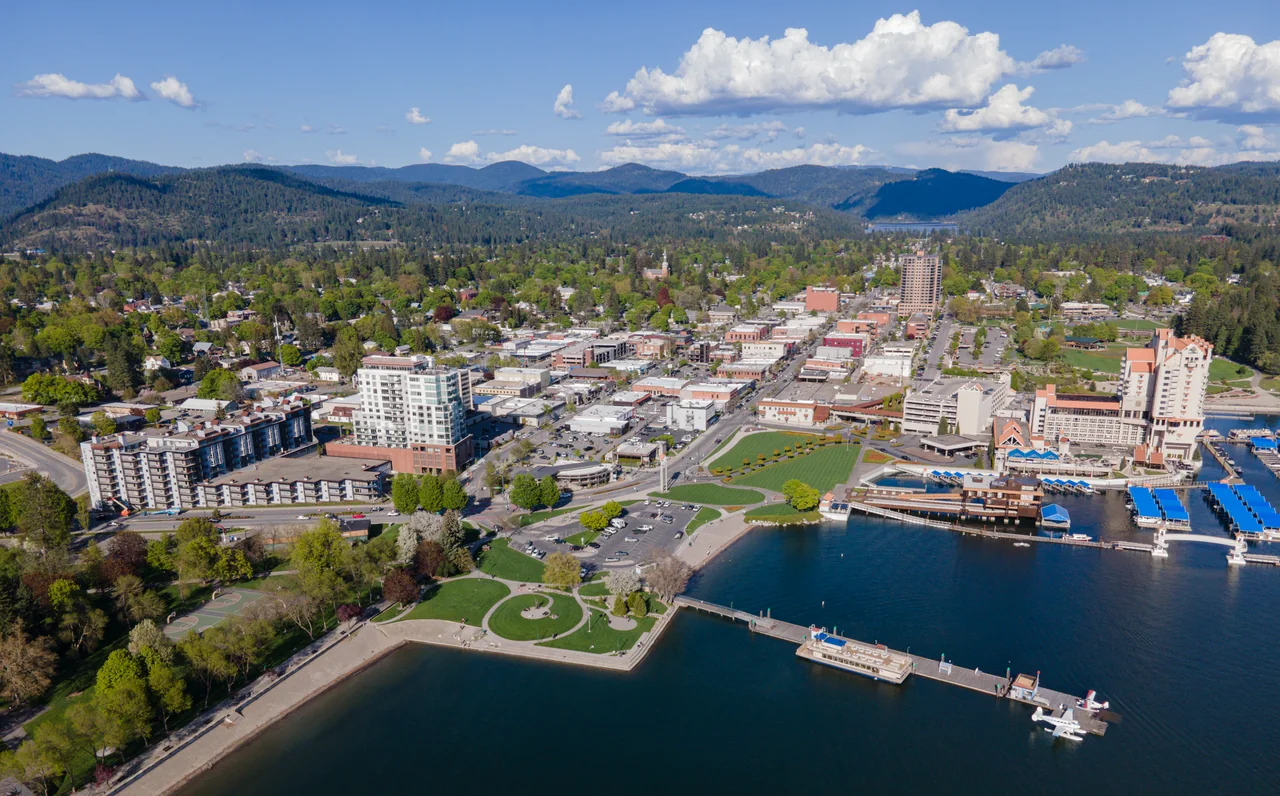
Coeur d’Alene combines a developed lakefront city with nearby wooded hills and a much wider region of rural properties. That mix makes broad statements about local wildfire insurance unhelpful. The view from a downtown home, a sloping parcel above the lake and an outlying property may be very different, even when every owner writes Coeur d’Alene on the application.
For a homeowner facing a difficult renewal, the productive next step is to explain that difference. Gather the company’s stated reason, then build a concise property description around the house, its surroundings and its actual use. A licensed specialist can work from those facts when considering potential options. A regional reputation cannot replace that review.
Start by locating the property precisely
Kootenai County describes Coeur d’Alene as its largest city and county seat, on the shore of Lake Coeur d’Alene. The county also includes many other lake and mountain settings. County context helps orient a reader, but it does not establish that an outlying address has the same services or exposure as a lot within city limits.
Confirm the parcel location, fire district and water information rather than guessing from the mailing name. The city Fire Department is a useful contact for properties in its jurisdiction, while county emergency management supplies broader planning resources. A prospective buyer should settle these basic facts early, especially if a listing uses city language to describe a more distant location.
Show the land above and below a hillside home
A lake-facing photograph may hide the most important parts of a property review. Add images looking uphill, along the driveway and beneath any elevated deck. Show whether vegetation touches a fence, shed or building. Include the maintained area around the home and the point where it joins less-managed ground.
On a smaller city parcel, turn the same attention toward the immediate neighborhood: fences, attached garages, roof edges and closely spaced structures. The purpose is not to label one setting safe and another uninsurable. It is to prevent a reviewer from treating different layouts as though they were the same. Date photographs and explain any improvements made since older imagery was captured.
Tubbs Hill provides a documented local mitigation example
In a May 21, 2026 notice, Coeur d’Alene described its partnership with Kootenai County FireSmart on Tubbs Hill. The city reported that the 2025 first phase treated land on the hill's north side, while the notice described a second phase on the south side involving ground fuels, ladder fuels and hazardous dead trees. The notice is a dated project update, not today's trail-status report.
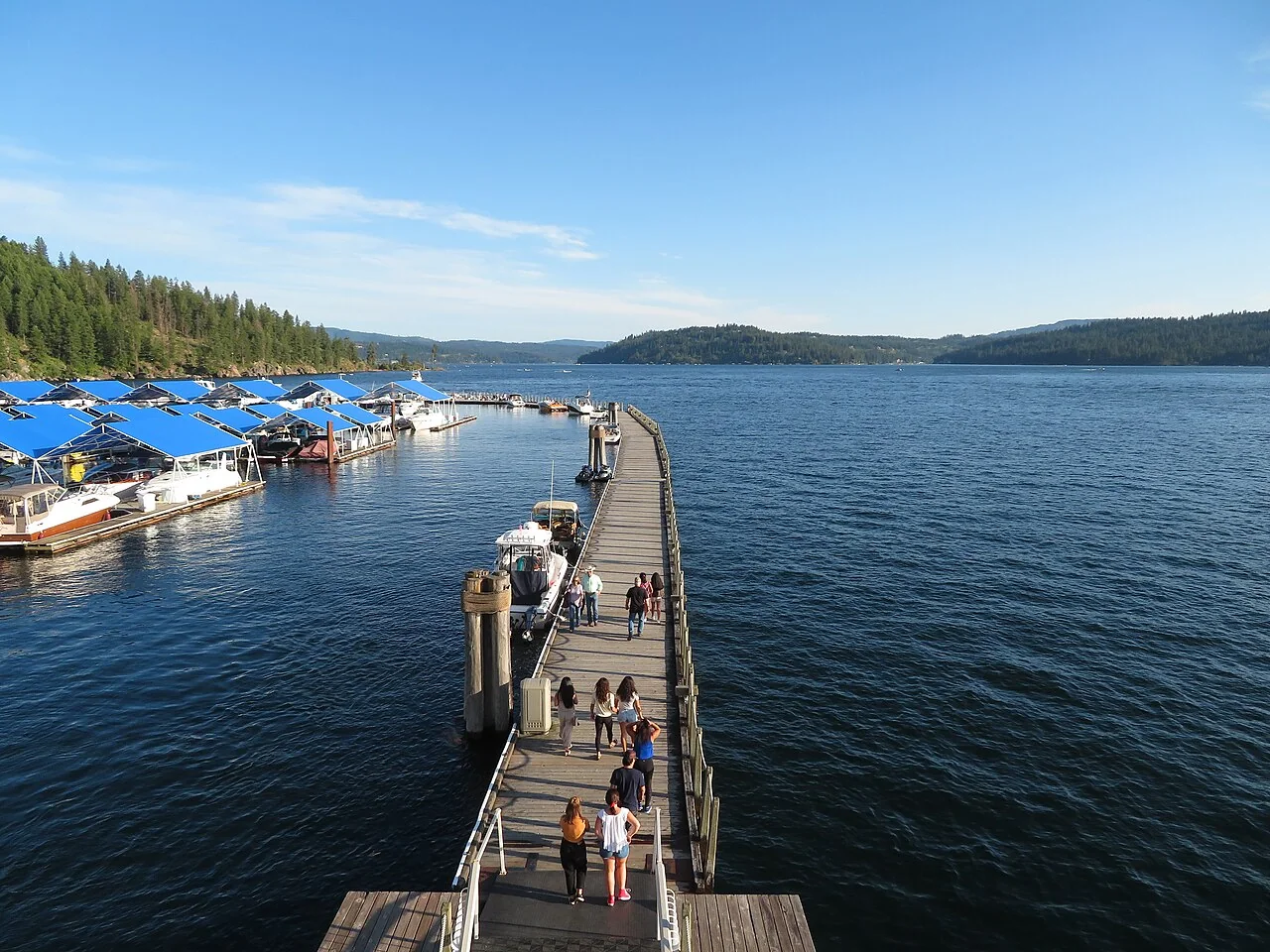
For a home near Tubbs Hill, identify the public project boundary before describing its relevance to an insurer. Work in the park does not certify nearby roofs, decks or private landscaping. The city also identifies FireSmart as a source of wildfire education and grant-supported assistance; ask the program directly about current eligibility and scope.
.jpg)
Make mitigation fit the site
Ask a qualified professional to review the connection between vegetation and building features. An elevated deck on a sloping lot calls for a different work discussion from a ground-level patio beside a compact city yard. Tree work, drainage and shoreline conditions may also require coordination with other authorities. Confirm what is permitted before committing to a large project.
Break the work into tasks with a responsible person and a completion record. Cleaning accumulated debris is different from replacing an exterior material or undertaking slope work. Save invoices and photographs for the latter, and maintain a simple recurring record for routine care. Our defensible-space guide and home-hardening guide explain those complementary conversations.
Lake homes deserve an occupancy review too
A Coeur d’Alene property may be a full-time residence, a second home or a rental. State the use accurately, including any guest apartment or separate building. If family members use the house between paid stays, explain the entire arrangement. An agent cannot reliably evaluate coverage from a description that leaves out part of the year.
Ask how the quote treats detached structures, household contents and any property used for a business. Keep a separate list of watercraft or other recreational equipment to discuss with the appropriate professional. The fact that belongings are stored at a lake house does not establish which policy covers them. Obtain answers before assuming a single homeowners contract handles everything.
Prepare for disruption without assuming coverage
Use Kootenai County’s official emergency resources to identify alert channels and build a household communication plan. Consider how visitors, pets and family members away from home would receive instructions. A familiar road to the lake may not be the route authorities direct people to use during an incident. Do not rely on a static article for road status.
Separately, ask the insurance professional about additional living expenses, evacuation-related circumstances, smoke and the documentation required for a claim. Keep the actual policy conditions with those answers. A hotel receipt is a useful record, but its existence does not establish that a particular expense is reimbursable. Obtain guidance from the insurer as soon as circumstances permit.
Canfield and Fernan represent different edges of the city
The city's trail resources identify Canfield Mountain Natural Area, Tubbs Hill and Fernan Natural Area as distinct local destinations. Its 2017 trails plan places Canfield Mountain Natural Area in the northeast part of town beside national-forest land and describes Fernan Lake Natural Area along the lake's southern side. These named settings help explain why a single lake-city label is inadequate.
When buying near Canfield or Fernan, check the parcel boundary and responsible landowner rather than borrowing the description of a nearby park. Include the slope-facing elevation and driveway in the insurance photographs. A recreational trail is not proof of emergency vehicle access, and proximity to public open space is not an insurance risk ranking.
Organize the next insurance conversation
Prepare a cover sheet with the address, construction details, occupancy, claim history and completed mitigation. Attach the current declarations and any notice. Identify pending work clearly. Our nonrenewal guide helps keep deadlines visible while the options guide supports a comparison of proposed coverage.
For a lake or hillside home with distinctive finishes, ask how rebuilding costs were estimated and whether the description captures them. Review limits and deductibles alongside the premium. If questions about a policy or insurer remain unresolved, the Idaho Department of Insurance provides consumer resources. You can pursue a careful review without accepting the assumption that every Coeur d’Alene home presents the same problem.
Explore the Idaho guides
Read the Idaho wildfire insurance overview for state resources and questions about available insurance paths.
Common questions
Does a lakefront location mean a Coeur d’Alene home has no wildfire exposure?
No. Water frontage is one feature of a larger setting. Photograph the landward side, surrounding vegetation and attached outdoor areas. Ask for an assessment of the actual structure and parcel. A view over Lake Coeur d’Alene is not an insurance classification or a substitute for examining the home.
Why should I confirm the fire district when my address says Coeur d’Alene?
A mailing address does not by itself prove city jurisdiction or service arrangements. Ask the appropriate local authority to confirm the parcel information. Give the agent verified details rather than assuming that every property using the city name has the same fire protection or water supply.
What should I document after work on a hillside deck?
Keep the contractor’s description, product information where relevant and dated photographs showing both the detail and the deck’s relationship to the slope. Explain any remaining work. Let the insurer decide which records it needs; do not describe an improvement as a guarantee of acceptance or a reduced price.
Does the Tubbs Hill project establish coverage for nearby homes?
No. The city’s project notice concerns work on identified public land, including separate north-side and south-side phases. Ask about current status and boundaries, then document your own property. Community mitigation is useful context, but an insurer still evaluates the individual house and proposed policy.
Sources and further reading
- Kootenai County: local geography
- City of Coeur d’Alene: Fire Department
- Kootenai County Sheriff: hazard-mitigation planning
- Kootenai County: emergency management
- Idaho Department of Insurance: home and renters insurance
- City of Coeur d’Alene: May 2026 Tubbs Hill fuel-reduction notice
- City of Coeur d’Alene: park paths and trails
- City of Coeur d’Alene: 2017 Trails and Bikeways Master Plan
Program rules and insurance terms can change. Check the linked agency or program before relying on eligibility, coverage, or local requirements.
General educational information. This website does not issue policies, bind coverage, or provide emergency alerts. Coverage and eligibility require individual review.