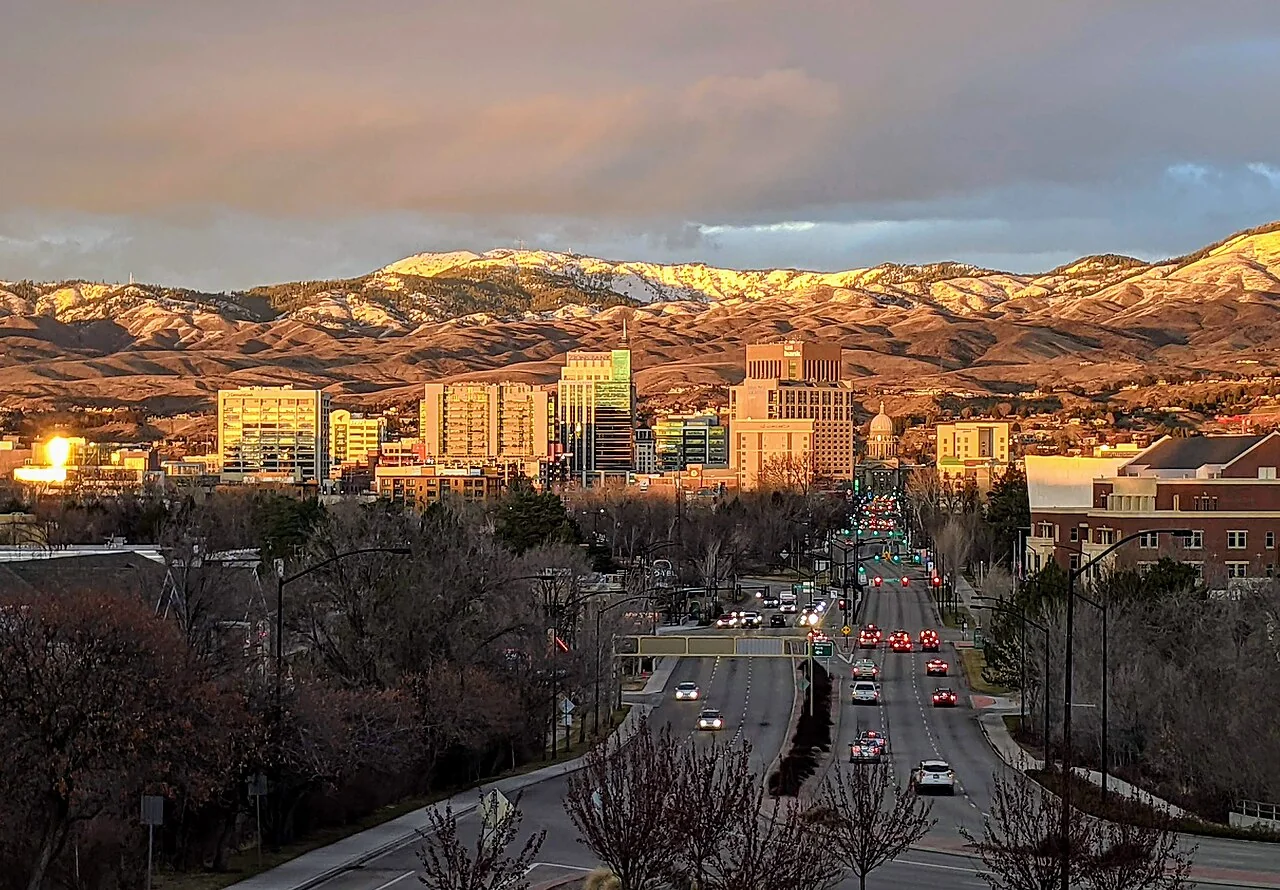

Idaho's landscapes create different questions for a foothill home outside Boise, a wooded property around McCall or a residence near a northern lake. The home, its immediate surroundings, its use and the insurer's policy terms need their own review. A difficult renewal is a reason to organize the search early, and there may be other options worth discussing with a licensed Idaho agent.
Start with a private-market review
Ask an agent to compare available private-market policies and explain how wildfire is treated in each offer. If a standard-market company declines, ask whether other standard or specialty markets can consider the property. Availability depends on the company and the individual submission. A proposed program, insurer list or general statement about the market is not an offer of coverage.
For the current status of any state fallback option, check with the Idaho Department of Insurance. Its consumer resources are also a starting point for understanding a coverage concern. Do not treat historical discussions of reinsurance or mitigation funding as confirmation that a policy of last resort is available to purchase.
Five Idaho areas and their different surroundings
These links help frame local questions. The table is not an underwriting map or a claim that every house in a city faces the same exposure.
| City / area | Why wildfire / brushfire exposure varies | State FAIR Plan? |
|---|---|---|
| Boise | Sagebrush, cheatgrass and steep Boise Foothills. Conditions vary by property, vegetation, slope and nearby structures. | Check current status with Idaho DOI. |
| Idaho City | Steep timber, creek corridors and dispersed mountain homes. Conditions vary by property, vegetation, slope and nearby structures. | Check current status with Idaho DOI. |
| McCall | Payette Lake, pine forest and mountain subdivisions. Conditions vary by property, vegetation, slope and nearby structures. | Check current status with Idaho DOI. |
| Coeur d’Alene | Lake-edge hills, mixed conifer and grass-brush slopes. Conditions vary by property, vegetation, slope and nearby structures. | Check current status with Idaho DOI. |
| Sandpoint | Lake Pend Oreille, Selkirk foothills and mixed-conifer forest. Conditions vary by property, vegetation, slope and nearby structures. | Check current status with Idaho DOI. |
Make the quotes comparable
Begin with the home's rebuilding estimate, not simply its sale price or mortgage balance. Tell the agent about construction, updates, outbuildings and occupancy. A seasonal cabin, a primary residence and a home offered for rental can call for different policy questions. Accurate descriptions reduce the chance that a quote is based on the wrong use or building details.
Ask the agent to show you where the proposed policy addresses fire, wildfire and smoke, including any exclusion or special deductible. Compare replacement cost and actual cash value provisions, roof settlement, personal property and detached structures. Review additional living expense or loss-of-use limits and personal liability separately. A smaller premium is difficult to evaluate until the coverage and deductibles are placed side by side.
If the proposed solution involves multiple contracts, identify which covers the building, belongings, liability and temporary living costs. Ask about gaps between exclusions, the combined annual cost and any conditions that must be satisfied before coverage starts. Have the lender review the proposed documents if lender requirements are part of the problem.
What to do with an Idaho nonrenewal notice
Save the notice and record its stated reason, effective date and any response instructions. Ask the insurer or agent whether incorrect property facts can be corrected and whether completed work can be reviewed. Keep a record of the response. Contact Idaho DOI with questions about how the notice was handled; do not assume an informal conversation changes the date printed on it.
At the same time, build a submission packet with current declarations, claim dates, repair records and photographs from all sides of the home. Include roof information and a clear explanation of occupancy. Ask a prospective agent which documents remain outstanding and what must occur before coverage can be bound. Confirm the new policy's effective date in writing when arranging the transition.
Connect home evaluations with useful documentation
The Idaho Department of Lands offers wildfire action and preparedness resources. Idaho Firewise home-evaluation guidance can help owners identify practical work around a home. Ask about the evaluation process and available local assistance rather than assuming every address has the same service or project requirements.
Use an assessment to organize work and questions. Preserve dated photos, contractor descriptions and receipts. Before spending money solely to satisfy an insurance concern, ask the agent what the insurer has actually requested and what evidence it will review. A home evaluation and an insurance underwriting decision serve different purposes. Completing recommended work does not guarantee acceptance, a lower price or renewal.
For a manageable first step, gather the notice, declarations and a few current photographs. Our coverage-options guide explains the questions to carry into the agent conversation, while the home-hardening guide helps organize property preparation.
Separate a city address from the property's setting
An Idaho mailing address can describe homes with very different surroundings. The useful distinction may be an urban lot, a foothill edge, a wooded parcel, or a seasonal lake property. Ask the local fire authority which conditions deserve attention at the actual address and provide the insurer with a consistent description.
A picture showing the house alone may hide a detached shop, stored materials, or the relationship between the driveway and vegetation. Include wider views and identify which buildings are part of the application. If the property is occupied only part of the year, explain who maintains it and how inspection or renewal notices are received.
Use an assessment as a starting point for questions
Idaho's forestry and insurance resources can help homeowners organize different parts of the problem. A preparedness recommendation concerns physical conditions. An insurance request concerns a particular company's review. Keep the source of each instruction clear, especially when an assessment and an insurer's inspection use different terminology.
Before spending money, ask what work is being requested, which building or boundary it concerns, and what evidence will be accepted. If a condition involves neighboring land or shared access, identify the responsible owner or association rather than assuming you can alter it yourself.
For a replacement-policy search, bring a declarations page, current claim and repair records, and photographs reflecting the latest condition. Ask whether the quote includes wildfire, how detached structures are treated, and which deductible would apply. Review living expense coverage and any limits that would matter if temporary housing became necessary after a covered loss.
Keep an unresolved-questions list separate from completed tasks. It can identify the insurer contact, local assessment contact, and next follow-up date without suggesting that either organization controls the other's decision.
Idaho's local guides can help make that list more specific. They should not be read as a promise that a home in one named community has better insurance prospects than a similar home elsewhere. The property, application, and offered contract remain the center of the review.
Common questions
Where should I confirm Idaho’s current FAIR Plan status?
Ask Idaho DOI directly about the current availability and status of any state fallback program. Historical proposals for reinsurance or mitigation are not proof that a homeowner can purchase a FAIR policy.
Can Idaho Firewise decide whether my home qualifies for insurance?
A home evaluation supports mitigation planning. Insurance acceptance is a separate decision made under the insurer’s requirements. Ask the agent which assessment records or improvement documents the company will consider.
Should I describe seasonal use of my Idaho cabin?
Yes. Tell the agent about seasonal occupancy, vacant periods, rental use and detached structures so the coverage review reflects the property’s actual use. Ask how those details affect the offered policy.
What if my Idaho insurer has incorrect property information?
Ask how to submit corrections and supporting photographs or records, and keep the response. Continue exploring replacement coverage until the insurer confirms any change to its decision and the applicable dates.
Sources and further reading
Program rules and insurance terms can change. Check the linked agency or program before relying on eligibility, coverage, or local requirements.
General educational information. This website does not issue policies, bind coverage, or provide emergency alerts. Coverage and eligibility require individual review.