Start at the house and work outward
A property does not have to sit inside a dense forest to face wildfire or brushfire exposure. Grass, shrubs, accumulated debris, fences, and nearby structures can all matter. Focus on the specific conditions around your building rather than assuming that a city name or a broad map fully describes your situation. A local assessment can help turn a general concern into a useful work list.
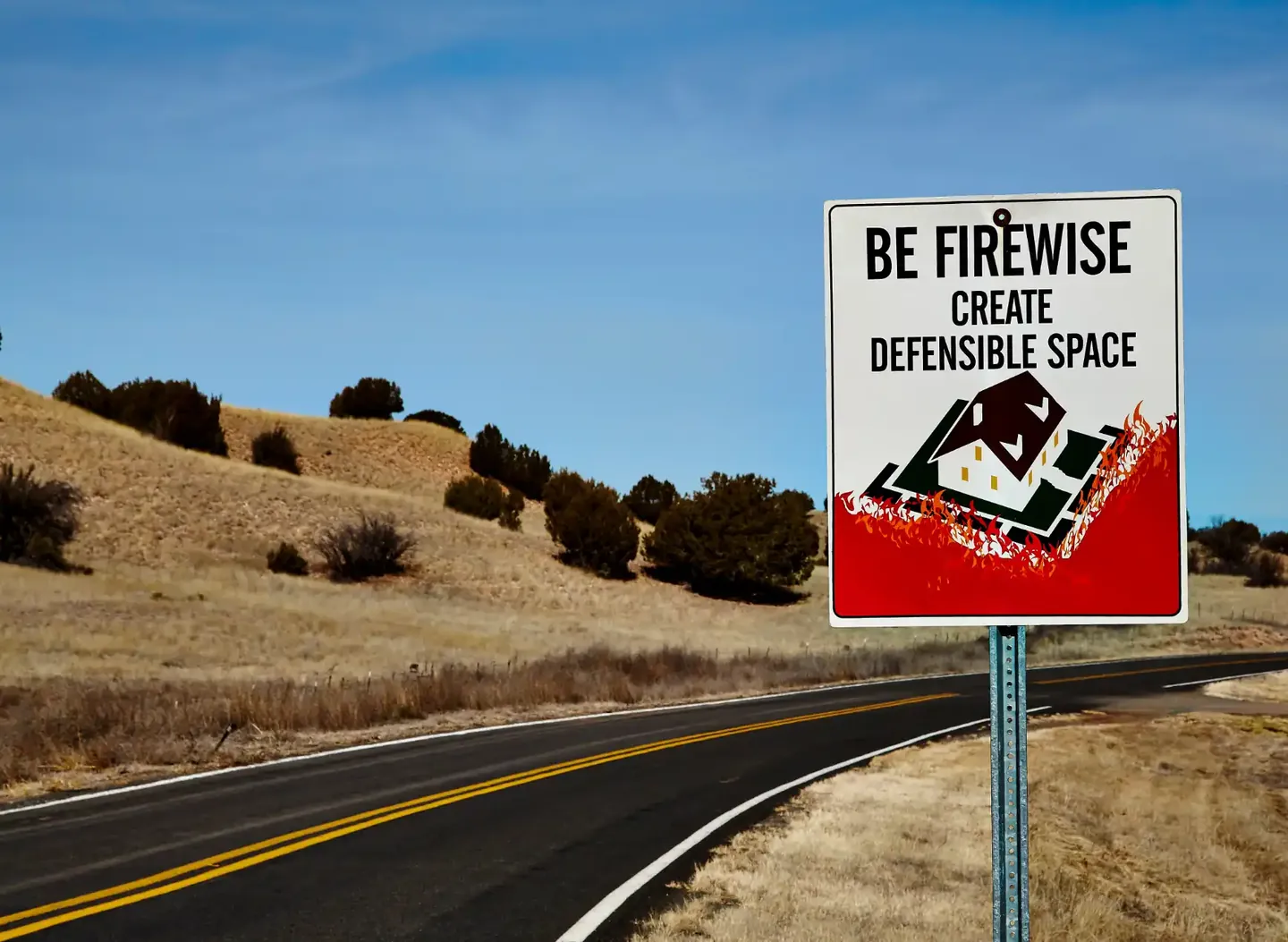
NFPA organizes the home ignition zone into an immediate area from zero to five feet, an intermediate area from five to thirty feet, and an extended area from thirty to one hundred feet. These are educational planning distances measured from the home and attached features. They are not a substitute for local law or a property-specific assessment.
The immediate area
Give the space closest to walls, decks, and stairs early attention. Look for combustible mulch, leaves, stored items, and vegetation that could provide a path to the building. Consider noncombustible landscaping close to the structure. Check the places you seldom see, including corners, under steps, and beneath attached decks. Keep roof and gutter debris in the same maintenance conversation.
The wider landscape
Farther out, discuss vegetation spacing, accumulated dead material, and branches with a qualified local professional. Slope, plant type, erosion, access, and neighboring conditions affect what is appropriate. Do not treat a distance diagram as permission to remove every tree or clear another owner's land. Ask the fire authority how its recommendations apply to your actual boundaries.
Separate four different kinds of requirements
The word “required” can mean several things. A helpful first step is to identify who made a request and what consequence they described. An insurer's inspection letter, a municipal notice, a contractor's proposal, and a voluntary recognition checklist may overlap, but they do not establish the same obligation. Keep each document in your property folder.
| Source | What to confirm |
|---|---|
| Local authority | The rule that applies to your parcel, its deadline, and any permit or habitat constraints. |
| Insurer | The specific correction requested, acceptable evidence, and whether it affects eligibility or renewal. |
| Safety assessment | Recommended priorities and how the assessor considered terrain and adjacent exposure. |
| Voluntary program | Current participation standards, inspection steps, maintenance duties, and any cost. |
If two requests appear inconsistent, ask the issuing organizations to explain them before authorizing work. For example, a vegetation clearance request may require coordination with a slope specialist or a protected-tree rule. Record the explanation and the approved approach. Do not assume that a contractor can interpret an insurance condition on the carrier's behalf.
Build a plan you can maintain
Walk the accessible parts of the property in safe conditions and make three lists: tasks you can complete, tasks requiring a professional, and questions needing an answer. Start with observable conditions rather than guessing at a risk score. A dated photograph of each concern makes it easier to request an estimate and later show what changed.
For a tight budget, ask the assessor which maintenance tasks deserve attention first and which larger projects depend on other work. Request written estimates that distinguish labor, disposal, permits, and recurring upkeep. Check directly with your local fire or forestry office for any currently available assistance. Do not plan around a grant until eligibility, funding, and timing are confirmed.
Mobility limitations, rental arrangements, small lots, and shared boundaries are real constraints. Explain them when requesting advice. A homeowner should not have to climb a roof, operate unfamiliar equipment, or work near power lines to demonstrate commitment. Ask about accessible inspection methods and qualified help. Coordinate with an owner or association where you do not control the work.
Make improvements easy to review
Wildfire underwriting involves more than landscaping. An insurer may consider the building, access, surrounding fuels, claims information, and its current willingness to insure the area. Defensible space may support review without producing a discount or a renewal offer. If you received a nonrenewal notice, continue shopping while asking whether completed work could change the existing decision.
Create a concise improvement record with the property address, work dates, before-and-after photographs, invoices, and any assessment. Label photos by location, such as the north wall or rear deck. Explain what remains unfinished and provide a realistic schedule. A simple, accurate record is more useful than a polished statement that overstates the work.
Before paying for an inspection or certificate, ask the agent what the insurer actually accepts. Find out whether photographs are sufficient, whether an approved assessor is needed, and whether the company can reconsider the property now. Obtain any revised offer or renewal decision in writing. A verbal acknowledgment of your effort is not confirmation of insurance.
Keep the work current and include neighbors
A cleared area can collect leaves again, and stored furniture or seasonal decorations can change conditions near the house. Set reminders that fit your landscape and household. Repeat photographs after major work so your file reflects the property today. Review maintenance expectations after moving in, adding a deck, replacing landscaping, or changing how an outbuilding is used.
Where properties are close together, ask about a neighborhood assessment or a coordinated cleanup. Share requests respectfully and stay within your property rights. Community efforts can complement individual work, but a neighborhood designation does not certify every home. Keep your own records and ask insurers separately how they consider community participation.
After a cleanup, ask the person who completed it to walk through the scope with you. Confirm that debris was removed as agreed and that access, drainage, and required vegetation protections were preserved. Save that completion note with the estimate and photographs.
Choose one practical next step
Begin with a safe inspection of the space beside your walls and attached structures, then request local guidance for questions you cannot answer. Pair this work with home hardening and an evacuation plan. These efforts address different needs and belong in the same preparation routine.
Complete mitigation during ordinary, safe conditions. Never delay evacuation to clear vegetation, take insurance photographs, or finish a checklist. During an active emergency, follow local authorities. For advance insurance planning, use your improvement record to support a conversation with a licensed specialist about available coverage and any remaining underwriting conditions.
Common questions
Does defensible space guarantee that my home will survive a wildfire?
No. It addresses ignition vulnerabilities but cannot eliminate wildfire risk. Building features, surrounding conditions, weather, and the fire itself also matter. Maintain an evacuation plan even after completing extensive mitigation.
Are the zero-to-five-foot guidelines a law everywhere?
No. The planning framework is educational guidance. Local ordinances, building codes, insurer conditions, and voluntary programs can impose different requirements. Verify the rule for your property with the authority or organization that issued it.
What if my lot is smaller than the recommended distances?
Work within your property rights and ask a local assessor how to prioritize the space you control. Shared boundaries may call for coordination with neighbors or an association, not unauthorized clearing.
Should I remove every tree near my home?
Do not use a general checklist to make that decision. Obtain advice on tree condition, spacing, slope, local restrictions, and the relationship to the structure from a qualified local professional.
Will clearing brush reverse a nonrenewal?
Possibly, but only if the insurer agrees after reviewing the property and its requirements. Ask about reconsideration while pursuing replacement insurance. Do not let the policy deadline pass while waiting for a response.
What photographs are useful for an insurer?
Ask the insurer first. Dated views of each side of the home, attached structures, and corrected conditions can help when requested. Label locations and distinguish completed work from planned work.
Can a community project replace work at my home?
Community projects and individual mitigation have different roles. A community designation does not establish that your home meets an insurer or program standard. Confirm both sets of expectations.
When should I do the work?
Plan maintenance and professional projects ahead of emergencies, in safe conditions and within local restrictions. Never remain behind during an evacuation to finish landscaping or collect evidence for an insurer.
Sources and further reading
Program rules and insurance terms can change. Check the linked agency or program before relying on eligibility, coverage, or local requirements.
General educational information. This website does not issue policies, bind coverage, or provide emergency alerts. Coverage and eligibility require individual review.