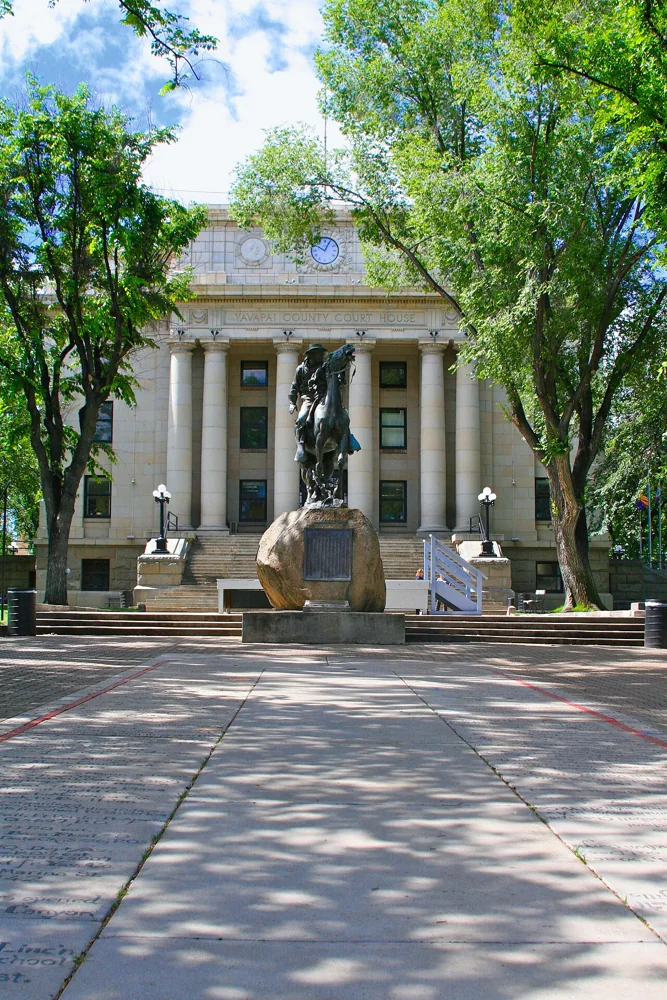

In Prescott, the property details hidden behind a beautiful hillside view often matter most in an insurance conversation. Consider the brush below an elevated deck, the trees over a roof, or the driveway that curves uphill from the street. Those features deserve their own description. A general statement that a house is near the Bradshaw Mountains will not tell an agent what has changed or what remains to be evaluated.
Prescott Fire Department takes a community approach to wildfire risk, combining homeowner education, defensible-space work and neighborhood coordination. Homeowners can use those local resources while organizing insurance records. The goal is a clear account of the home you own, not a claim that every Prescott property has identical exposure or that any one improvement guarantees coverage.
Describe your part of Prescott precisely
Wooded settings toward the southern hills, chaparral-covered slopes and more developed streets near the center of town should not be described interchangeably. Start with the parcel itself: vegetation type, slope direction, building separation and the connection to neighboring open land. If a real-estate description says private forest retreat, translate that marketing language into photographs and facts an insurance reviewer can understand.
A Prescott postal address also does not, by itself, establish which agency serves the property. Before requesting a courtesy inspection or assuming a municipal program applies, verify whether the house sits inside city limits and which fire organization has responsibility. Keep that answer with your property records. It can prevent delays when a contractor, agent or prospective buyer asks for the appropriate local contact.
Use Prescott's assessment process as a starting point
The fire department's Wildfire Risk Management page describes courtesy assessments and reports homeowners can retain and share with landscapers or insurers. This creates a useful sequence: obtain a professional observation, choose the appropriate work and document completion. Ask which recommendations concern vegetation and which concern the building itself. Clarify the scope before requesting bids so contractors are pricing the same tasks.
A report is evidence of observations and recommendations, not an insurance approval. If an insurer requests changes, show the specific request to the assessor and ask whether the proposed work addresses it. Keep the original request, the assessment and the completion record together. That makes it easier for an agent to explain what was done without overstating the fire department's role in underwriting.
Work with the slope, the brush and the building
For a hillside house, photograph the lower side as carefully as the street-facing side. A raised porch can conceal stored lumber, leaves or dry vegetation. Note whether a fence continues uphill to the structure or whether brush sits beneath exterior stairs. These observations help direct an assessment; they are not instructions to remove every plant or alter drainage without advice.
Prescott's guidance explains that defensible space does not require a barren landscape. Discuss selective work that reduces connected fuels while respecting property boundaries and site conditions. On steep ground, ask about erosion and how material will be removed safely. If your lot touches another owner's land, document the boundary and approach shared concerns through the appropriate owner, association or public agency.
The city also describes brush-chipping assistance and mitigation grants. Check current eligibility, funding and preparation requirements before scheduling work or counting on reimbursement. Ask whether approval must precede the work. A grant webpage is a place to begin a conversation, not proof that funds are reserved for your project. Save correspondence confirming any assistance you actually receive.
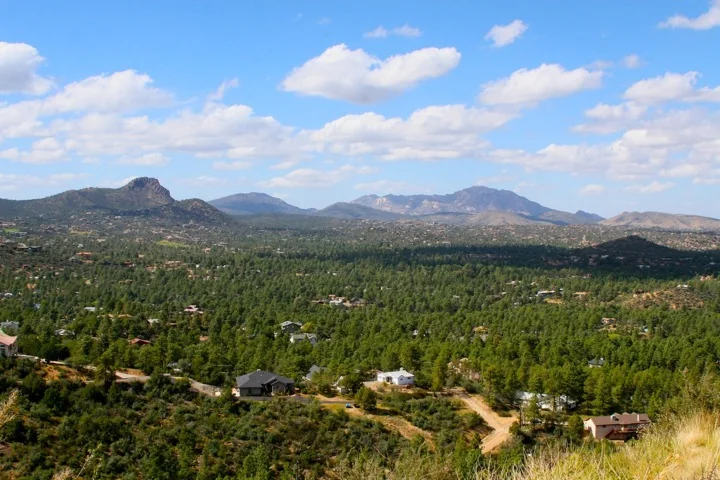

Keep older-home details visible in the insurance file
Some owners are maintaining older construction while others are insuring newer hillside houses. Either way, an insurer needs more than the age listed in a property record. Identify roof replacement dates, electrical or plumbing updates, additions and detached buildings. When repairs followed a prior claim, retain the invoice and the final condition photographs so the file shows the work was completed.
If architectural details would be expensive to reproduce, raise that during the rebuilding-cost review. Ask whether the estimate captures actual materials, access constraints and permitted improvements. Review ordinance-or-law provisions, roof settlement terms and deductibles in the proposed contract. These are coverage questions for the licensed professional; a neighborhood name, assessment report or historic appearance cannot answer them.
Ask focused questions when a carrier declines
A rejection may feel like a judgment on your entire property, but the next useful step is to learn exactly what information supports it. Ask whether the issue concerns a current inspection, an image, the surrounding area, loss history or another underwriting factor. If a photograph predates mitigation, submit a clearly dated replacement showing the same area from a comparable viewpoint.
Do not promise that clearing more brush will reverse a decision unless the insurer has explained an available review process. Instead, ask your agent which changes may be relevant and which other insurers can consider the actual address. Our nonrenewal guide helps organize dates and documents; the options guide outlines questions for comparing proposals once alternatives are found.
Make emergency planning practical for your household
Prescott Fire Department's emergency-preparedness page links to AlertYAVAPAI and the county emergency information hub. Use official local resources to confirm the alert arrangements appropriate to your address. Household planning should account for a winding driveway, a locked gate, a person who needs assistance or animals that require transport. Those details are easier to solve before an emergency notification arrives.
Do not choose a permanent escape route from a static insurance article. Local officials may direct movement differently as conditions change. Keep medications, contact information and policy details accessible, and decide how family members will communicate if separated. If you have a vacation home, make sure the person checking it knows whom to contact without being expected to enter an unsafe area.
Turn neighborhood participation into verifiable information
Prescott encourages residents to collaborate on community preparedness. If your neighborhood participates, keep a copy of the current plan or the association's description of completed work. Identify what happened on common land and what happened on your own parcel. Ask about future maintenance, because vegetation grows back and a completed project still needs upkeep.
Share those records with a specialist agent as additional context. Request a comparison of available limits, exclusions, living-expense provisions and required inspections, not just premiums. An accurate file can make a difficult insurance search more productive while helping you prioritize worthwhile improvements for the home itself. There may be useful next steps even after your first carrier has said no.
Continue exploring Arizona
Arizona wildfire insurance guide
Common questions
Does Prescott Fire Department offer individual property guidance?
Its Wildfire Risk Management page describes courtesy wildfire assessments and reports for homeowners. Confirm the appropriate service for your exact address, then ask how to obtain a written record you can use when planning work or speaking with an agent.
Should I remove every tree from my Prescott lot?
A local assessment is the better starting point. Prescott explains that defensible space need not mean a barren yard. Ask about selective treatment, building vulnerabilities, property boundaries and erosion before making expensive landscape changes.
Can I assume a Prescott mitigation grant will reimburse my project?
No. Confirm current program availability and requirements before work starts. Keep written approval and receipts if you qualify. The existence of a grant program does not establish your eligibility or guarantee reimbursement.
What if an insurance inspection used an old exterior photo?
Identify the exact area shown, take dated photographs after completed work and submit supporting invoices. Ask the agent whether the insurer has a reconsideration process. Updated evidence helps correct the record but does not promise a different underwriting decision.
Sources and further reading
- Prescott Fire Department: Wildfire Risk Management
- Prescott Fire Department: Emergency Preparedness
- Central Arizona Fire and Medical: evacuation preparedness
Program rules and insurance terms can change. Check the linked agency or program before relying on eligibility, coverage, or local requirements.
General educational information. This website does not issue policies, bind coverage, or provide emergency alerts. Coverage and eligibility require individual review.