
Flagstaff homeowners live with more than one version of mountain wildfire exposure. A house tucked into ponderosa pines has a different maintenance picture from a home facing open grassland northeast of town. A property below a forested drainage raises another question: what happens when heavy rain follows a fire uphill? Those differences deserve attention when you describe your home to an insurance professional.
If an insurer has raised concerns about your address, begin with the actual reason in its notice. A Flagstaff mailing address is too broad to explain the entire property. Forest proximity, the condition of the building and the accuracy of the insurer's information are separate topics. Clear evidence gives a specialist agent something concrete to review, even when a previous application was unsuccessful.
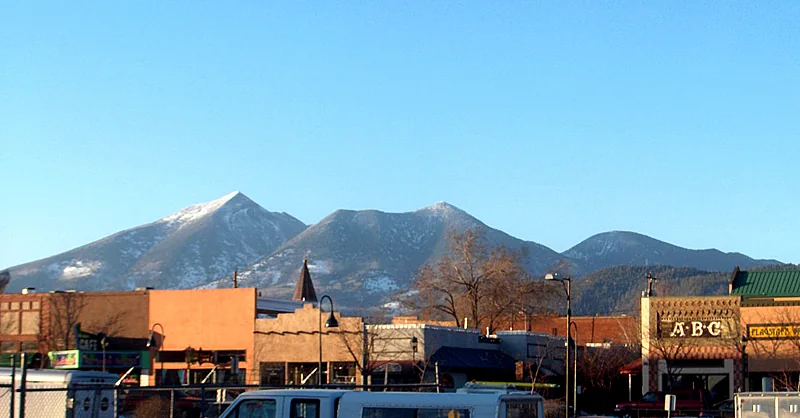
Look beyond the photograph of the San Francisco Peaks
The Peaks are a familiar backdrop, but the useful insurance photograph is usually closer to home. Show where pine needles collect against a roof valley, where a wooden fence meets siding, and whether vegetation continues from a neighboring parcel toward a deck. Include a wide view of the lot before taking close views of improvements. A roof image alone cannot explain the setting.
For an address around Fort Valley, ask a local assessor to distinguish the forest conditions around your parcel from conditions farther up the mountain. Around Doney Park or Timberline, describe the actual mixture of open ground, grasses and trees instead of calling everything forest. These are geographic examples, not neighborhood risk rankings. An individual assessment is more useful than assigning one label to an entire community.
Flagstaff's watershed lesson belongs in the conversation
The Flagstaff Watershed Protection Project identifies the 2010 Schultz Fire as a lesson in the consequences of severe fire followed by flooding. The city's Stormwater program also describes the Schultz basins as infrastructure protecting downstream areas from post-wildfire flash floods. These official local resources explain why a homeowner may need to ask about water even when the original concern was fire.
Do not translate that history into a claim that your street will flood or that a public project eliminates all risk. Ask the appropriate city or county office whether your parcel is connected to an affected drainage, whether newer studies apply, and where to find current flood information. Then bring those findings to your agent and request a separate explanation of flood, runoff and debris-related coverage questions.
Build a maintenance record that fits a pine-country home
A practical Flagstaff record follows the parts of the building where forest debris meets construction. Photograph gutters, roof edges, attached steps, the underside of accessible decks and the junction between a fence and the house. Use an insured professional for work requiring roof access, tree climbing or structural changes. Preserve receipts that describe materials and installation rather than relying on a broad note saying the home was improved.
Arrange the record as a short sequence: condition observed, assessment obtained, work completed and follow-up planned. Pine litter returns, so one cleanup photograph is not a permanent maintenance plan. If you spend part of the year elsewhere, identify who checks the property between visits. If a landscaper handles the work, ask for dated images from consistent angles that make later comparison straightforward.
Flagstaff's Wildland Fire Management program lists home and property assessments, hazard-tree evaluation and fuel-mitigation assistance among its services. Contact the program to establish the appropriate assessment for a city property; outside the city, confirm the responsible jurisdiction first. Ask the assessor to prioritize work around the structure and explain any tree or resource-protection requirements before you authorize cutting.

Separate forest work from your insurer's requirements
A nearby thinning project and a reroofing project on your house are different pieces of evidence. The first describes a change in the surrounding landscape. The second describes the insured structure. Supply the location and date of either project only when you can document them, and ask your agent which information a prospective insurer will consider. Avoid assuming community work automatically changes eligibility or premium.
When a notice refers to vegetation, request clarification about the location and condition involved. It might concern branches over the roof, a photograph that predates maintenance or something outside your ownership. Mark the property boundary on a simple sketch. If the concern lies on public or neighboring land, explain that fact accurately and seek lawful coordination rather than promising work you cannot perform.
Describe the way your Flagstaff property is actually used
A primary residence, a seasonal mountain home and a dwelling offered to guests can have very different insurance needs. Tell the agent about occupancy, rental activity, detached garages, workshops and any living space above an outbuilding. Include recent changes. A familiar local cabin style does not tell an insurer who occupies the house or which structures need protection.
Ask how the rebuilding estimate accounts for your home's actual construction, access and finishes. Market value and rebuilding cost answer different questions. Review the proposed dwelling limit, applicable deductible, settlement basis, additional living expense provisions and any wildfire-related conditions together. Our coverage-options guide can help organize a comparison; the final terms must come from the actual proposed policy.
Prepare for disruption before you need to leave
Keep emergency planning separate from the insurance shopping calendar. Identify the public agency responsible for alerts at your address and follow its current instructions. Roads such as Fort Valley Road or Highway 89 are geographic reference points, not promised evacuation routes. An incident may change which connections are available. Include household members, pets, mobility needs and a meeting arrangement outside the affected area in your planning.
Maintain an accessible copy of your inventory and policy contacts away from the house. If authorities require evacuation, ask the insurer how any prohibited-use or additional living expense provision applies to your circumstances. Record dates, orders and necessary expenses without assuming every receipt is reimbursable. A policy question should never delay following an official direction to leave.
A useful first call after a difficult renewal
Start with the renewal deadline, the written reason, the property's location and the work already completed. Supply claim dates and repair documentation through the agent's secure channel. Explain any discrepancy calmly and specifically. A focused submission is easier to evaluate than a collection of unrelated photos, and it helps distinguish a correctable record problem from an insurer's broader appetite for the area.
If you need additional options, a licensed specialist can investigate what is available for the home as it stands today. You do not need to pretend the surrounding forest is absent. You need an accurate description of the building, its setting and the steps taken to care for it. Our nonrenewal guide provides a companion checklist for that conversation.
Continue exploring Arizona
Arizona wildfire insurance guide
Common questions
Does living near the San Francisco Peaks determine my insurance eligibility?
No single landmark answers that question. Ask the insurer or agent what property information matters to its review. Photographs of your own roof, vegetation, slope and access are more useful than a general image of the Peaks.
Why ask about flooding when shopping for Flagstaff wildfire insurance?
Local watershed history shows why those questions belong together in planning. Ask officials about the drainage connected to your parcel, then have an insurance professional explain separate flood coverage and any relevant exclusions in the policies under consideration.
Can Flagstaff help me decide which vegetation work comes first?
The city lists home and property assessments through Wildland Fire Management. Confirm service eligibility for your address. Ask for a written priority list, and retain the assessment alongside dated photographs and contractor records.
Should a seasonal Flagstaff cabin be described as a primary home?
Describe its real occupancy and any rental use. Also disclose who maintains it while you are away. Correct use information helps the agent evaluate a suitable policy and prevents a quote from being based on the wrong living arrangement.
Sources and further reading
- City of Flagstaff: Wildland Fire Management
- City of Flagstaff: Stormwater Management
- Flagstaff Watershed Protection Project: project background
- National Interagency Fire Center: prepare and protect your home
Program rules and insurance terms can change. Check the linked agency or program before relying on eligibility, coverage, or local requirements.
General educational information. This website does not issue policies, bind coverage, or provide emergency alerts. Coverage and eligibility require individual review.