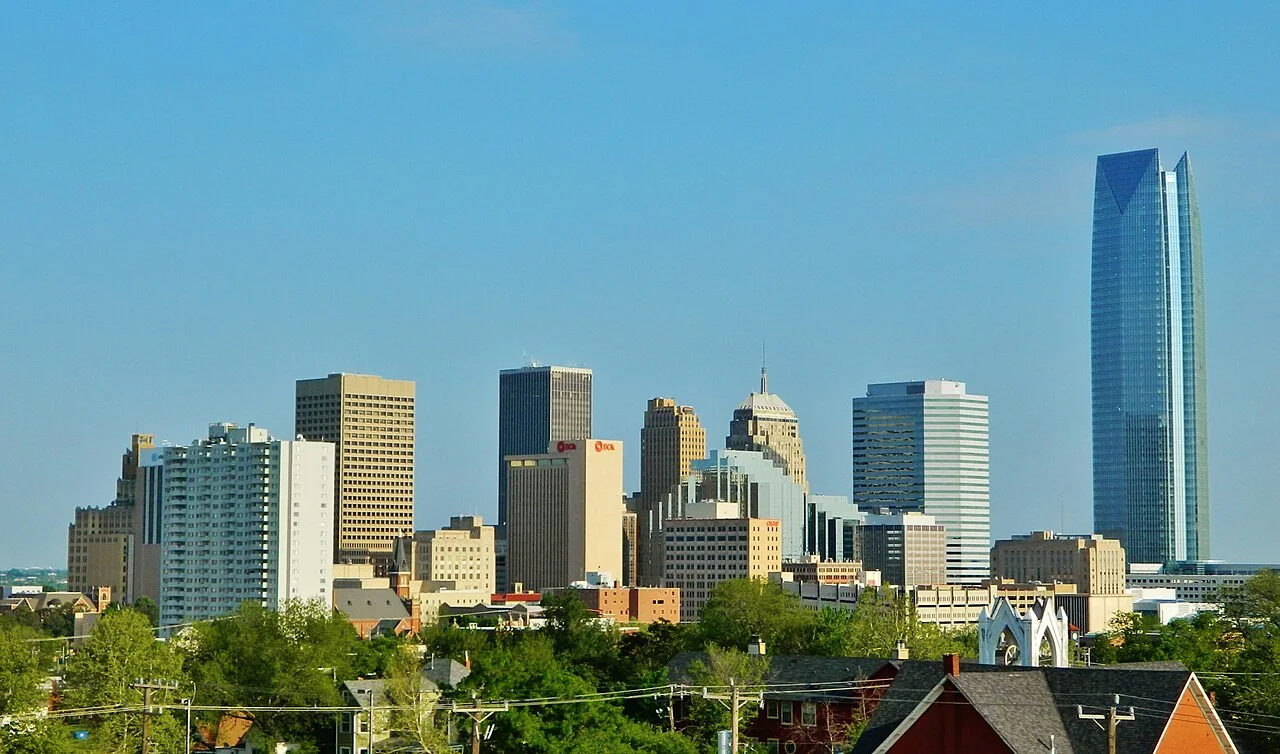

Oklahoma City is a large municipality with landscapes that do not all resemble its downtown. The city's own wildfire guidance notes extensive brush and pasture inside city limits as well as beyond them. A suburban-looking residence can therefore have an open-field boundary, while another home a short distance away is surrounded by developed lots.
This guide uses metro edge as a practical description, not a mapped insurance district. If your address is actually in a neighboring municipality or an unincorporated area, use that jurisdiction's information. A coverage search should identify the specific home and its responding agencies before drawing conclusions from the Oklahoma City name.
Open pasture can matter even without a forest
Acreage owners may associate wildfire with distant mountains or dense trees. On Oklahoma City's edge, inspect the connection between the residence and surrounding grass, brush, fence lines and storage areas. A broad view of a field is useful, but a reviewer also needs to see where vegetation reaches the yard, a workshop or a wooden fence.
Compare conditions on each side of the house. A maintained frontage along a busy road may differ from a rear boundary beside undeveloped land. That is a reason to photograph more than the driveway, not a basis for assigning the neighborhood a danger score. An agent can explain which surrounding features need further documentation for a particular insurer.
The southeast lake landscape is another distinct setting
Oklahoma City's trail information includes the Lake Stanley Draper area and routes connecting it with the wider city. The state Water Resources Board has also documented woodland around the lake in its environmental work. These public landscapes show why the metro fringe cannot be described as uniformly open prairie.
For a property near a wooded recreation area, establish the ownership boundary and photograph the transition to the residence. Do not assume lake proximity provides a usable firefighting water supply, and do not assume a public trail is an emergency vehicle route. Those questions belong with the responsible agencies. A view of water or parkland is geographic context, not evidence of insurance eligibility.
Know the difference between a weather warning and incident instructions
The City of Oklahoma City's wildfire page distinguishes a Red Flag Warning, which concerns weather favorable for wildfire, from a Fire Warning conveying information about an active event. That distinction helps residents interpret messages without treating every warning as the same instruction.
Set up ways to receive official local information before a windy day becomes an emergency. If you live outside Oklahoma City proper, identify the appropriate municipal or county source as well. Follow active directions about leaving or avoiding an area; neither a historical warning nor this article tells you which road is currently open.

Give barns, shops and stored equipment their own line in the file
Metro-edge properties can combine residential life with hobbies, equipment storage or small-business activities. Describe the actual use of every substantial outbuilding. A shop containing business stock, a structure sheltering animals and a garage holding personal vehicles may raise different coverage questions even when they stand on the same residential parcel.
Ask how the proposed policy treats the structure and what is inside it. Explain any paying occupants or rental use. Photograph the spacing between buildings and the vegetation around each one. Do not rely solely on the main dwelling's square footage when the rest of the property represents meaningful replacement cost or exposure.
For access, record the entrance location, gate arrangement and any area where vehicles cannot readily pass or turn. Ask the serving fire department whether an on-site discussion would be appropriate. Avoid entering guessed measurements in an application. A documented access improvement is more useful than an unsupported assurance that any fire truck can get through.
Keep storm claims and wildfire concerns clearly organized
An Oklahoma homeowner's file may already contain roof inspections or repairs associated with wind or hail. If the current insurer also raises wildfire questions, separate the subjects. List each claim's date, cause and repair status. Provide the roof installation invoice where available, and identify any pending work honestly. A confusing combined account can obscure improvements that have actually been completed.
Ask the agent which documents address the current underwriting concern and which are needed for the full application. If an insurer relies on older pictures, explain the changes since those images were captured. Updated evidence can support a review, but it does not obligate a company to accept a property or preserve its earlier premium.
Review what happens financially after a covered fire
The Oklahoma Insurance Department wildfire resource encourages keeping policy records and a home inventory available. For a home with several structures, an inventory should show more than household furniture. Ask the agent how tools, equipment and property used in a business would be treated under the actual contract.
Discuss rebuilding assumptions for the dwelling, limits for other structures, fire deductibles and provisions for smoke damage and debris removal. Ask about temporary living expenses and the conditions that activate that benefit. If the quote has separate wind or hail terms, have the agent explain them separately. A low overall premium does not reveal whether the fire-related protection matches your needs.
When ordinary placement is difficult, ask a licensed specialist to explain available options, including the implications of any surplus-lines proposal. Obtain the policy terms and fees rather than relying on a product nickname. Our coverage-options guide gives you a framework for comparing offers without assuming a guaranteed market for every metro-edge property.
Complete useful work before the insurance deadline
Prioritize the carrier notice, the current declarations and a concise property description. Then collect dated photographs of the house, field or woodland boundaries, roof edges and outbuildings. Add invoices for completed maintenance. Keep uncertain items on a question list, with a named source who can confirm them, instead of filling gaps with guesses.
Oklahoma City's Community Risk Reduction program provides another local entry point for prevention education. Larger acreage work may also involve forestry or other professionals. Confirm applicable restrictions before burning or vegetation work, and never use an old online notice as proof that conditions are suitable today.
There is a workable order to the process: establish the real property details, address documented issues and compare complete coverage proposals. Keep emergency departure needs separate and ready, including animals and essential medication. Good records help an insurance conversation; they are not a reason to delay leaving when officials direct you to do so.
Explore the Oklahoma guides
Read the Oklahoma wildfire insurance overview for state resources and questions about available insurance paths.
Common questions
Is metro edge an official Oklahoma City insurance zone?
No. It describes the subject of this guide. Use the actual address, municipality and serving fire agency for an application. Public boundaries and an insurer’s own review criteria should not be replaced with a broad marketing label.
Does a grass field matter if there are few trees?
It belongs in the property description. Show how the field meets the yard, fences and outbuildings, and ask a local professional about maintenance. A lack of forest does not eliminate the need to consider wildfire preparedness.
Does Lake Stanley Draper count as a firefighting water source for my home?
Do not assume that from proximity. Ask the responding agency and the agent how water supply should be documented. A lake, park trail or recreational entrance should not be represented as a verified protection feature without confirmation.
How should I explain a repaired hail claim during a wildfire review?
Keep its date, cause and completed roof work separate from the wildfire questions. Supply available invoices and current photographs. That lets the reviewer evaluate the current building without confusing a repaired past loss with an unresolved property condition.
Sources and further reading
- City of OKC: Wildfires
- City of OKC: Trails
- City of OKC: Community Risk Reduction
- Oklahoma Water Resources Board: Lacustrine wetlands report
- Oklahoma Insurance Department: Wildfires
Program rules and insurance terms can change. Check the linked agency or program before relying on eligibility, coverage, or local requirements.
General educational information. This website does not issue policies, bind coverage, or provide emergency alerts. Coverage and eligibility require individual review.