A request to clear vegetation can arrive from a fire district, an insurance company or a neighborhood program. Before hiring a contractor, identify who made the request and what it means. Understanding that distinction helps you complete useful work and document it for the right purpose.
Four different reasons for a property checklist
| Source | Purpose | What to confirm |
|---|---|---|
| Safety guidance | Reduce ignition opportunities around a home. | How recommendations fit the structure, vegetation and slope. |
| Law or local ordinance | Set enforceable obligations for covered properties. | Jurisdiction, applicable code, deadline and inspection process. |
| Insurer underwriting | Set conditions for a particular insurance decision. | The insurer's written requirement and acceptable proof. |
| Voluntary program | Support organized community mitigation and recognition. | Participation criteria and any separate insurance implications. |
Passing one checklist does not necessarily complete the others. Keep the documents separate so you can ask the responsible organization what remains outstanding.
Safety recommendations are a starting point
NFPA's home-ignition-zone guidance starts with the home and nearby surroundings. Reducing combustible material close to a building and managing vegetation farther out address different ways a fire can reach it. The details depend on the site.
For practical maintenance ideas, use our defensible-space guide together with home hardening. An online checklist should not be treated as a site-specific inspection or a promise that a home will survive a fire.
Confirm the applicable legal requirement
There is no single clearance distance that should be presented as the law for every American home. Ask the local fire department, fire district or code office which rules apply to the property's address. Request the ordinance or code reference and its current effective date.
A state agency's general guidance can differ from a locally adopted standard. Do not copy distances or inspection requirements from a different jurisdiction without checking applicability. Our state guides provide starting points for official resources.
- Does the rule apply to existing homes, new construction or a designated area?
- Which structures and property boundaries control the measurements?
- Are permits or protections for particular trees, slopes or habitat relevant?
- Who performs the inspection, and how is completed work documented?
Read an insurer's request literally
If the request came with an insurance inspection or renewal notice, ask the agent to clarify the specific work, deadline and evidence the insurer expects. A photograph, receipt or local inspection report may serve different purposes; ask what will be accepted rather than assuming.
If the request is unclear, crosses a property boundary or appears to conflict with a local restriction, raise that issue before work begins. Record the written response. Keep the insurance timeline in view while obtaining clarification, especially if a notice gives a deadline.
Keep community recognition in perspective
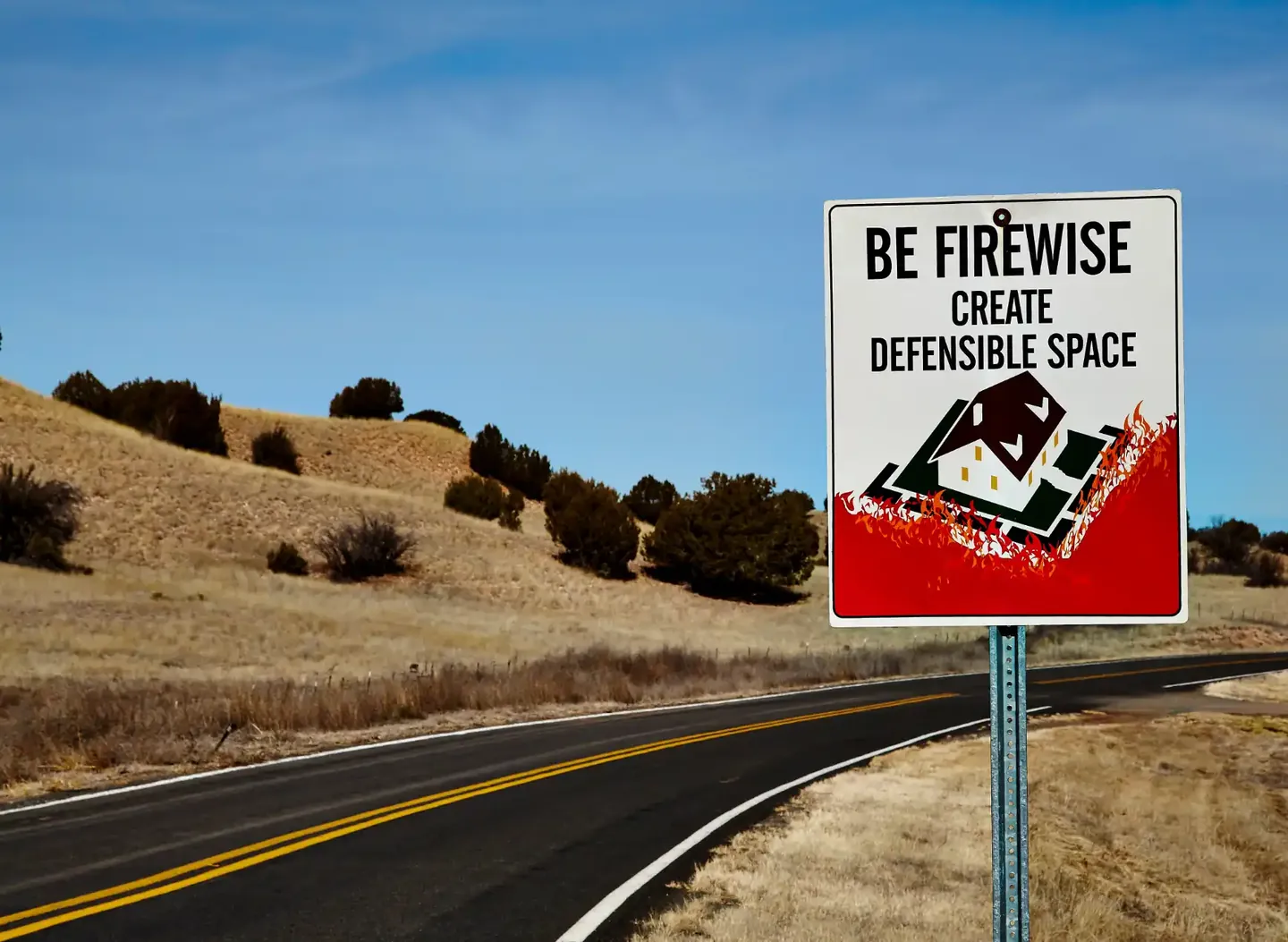
NFPA's Firewise USA program supports neighbors working together on wildfire risk reduction. Participation is useful community work, but recognition should not be described as a guarantee that an individual property meets every law or insurer's criteria.
Ask separately about any discount or underwriting consideration. Our mitigation and insurance guide explains the questions to raise. Maintain dated photographs, the original request, work records and any acceptance notice in the same file.
Turn a broad request into a written work list
Before hiring anyone, separate the request into observable tasks. A letter asking for vegetation clearance may leave questions about which plants, which structures, and which distances it addresses. Send those questions to the organization that issued it. A contractor can explain how to perform work, but cannot necessarily interpret an insurer's acceptance criteria.
Ask whether photographs need to show particular viewpoints, whether an inspection follows completion, and how to report a condition that cannot safely be corrected by the deadline. Keep the response with the original request. If the home is approaching its insurance expiration date, discuss the coverage timeline while the work is being clarified.
Check boundaries and permissions first
A homeowner may be concerned about vegetation that grows on a neighbor's land, a shared tract, or public open space. Identify ownership before planning removal. Ask the local authority and, where relevant, the property manager or association which responsibilities belong to you and which require coordination.
Slopes, protected vegetation, utility equipment, and drainage features can complicate an otherwise simple-looking project. Raise those conditions with the appropriate professional. Clearing an area without understanding the site can create a different problem. A defensible-space project should be planned with the applicable environmental, safety, and property restrictions in mind.
Use examples without turning them into universal rules
Imagine two neighboring properties receiving different requests. One homeowner has an insurer inspection that identifies vegetation touching the structure. The other is responding to a local notice about a broader parcel condition. Both concern wildfire preparation, but the responsible organization, required evidence, and completion process may differ.
That difference is why a neighbor's completed project is useful context rather than proof of compliance for your home. Ask to see the requirement that applies to your address and policy. A photo of another house cannot establish the necessary clearance, permitted work, or insurer approval at your property.
Make the record useful after the contractor leaves
Take dated photographs before and after work from comparable positions. Retain the invoice, description of tasks, permits if required, and any inspection result. If an insurer requested a correction, send the evidence through its stated process and ask whether additional information is needed.
Continue ordinary maintenance after the initial project. A photograph records a condition on one date; leaves, stored materials, and plant growth can change that condition later. Set a practical reminder to review the work with changing seasons and before renewal, without treating maintenance as a guarantee of continued insurance.
Keep safety priorities ahead of paperwork
Arrange routine work before an emergency rather than waiting for a fire warning. When authorities issue evacuation instructions, follow them. Do not stay behind to finish a checklist, obtain a final photograph, or preserve an insurance document that can be replaced.
If a task involves heights, chainsaws, unstable trees, electrical hazards, or structural changes, obtain appropriately qualified help. The goal is a documented, maintainable improvement to the property, with the right organization answering the right question.
Resolve conflicting instructions in writing
If one organization requests work that another restricts, share the relevant documents with both responsible contacts. Ask whether a different method can address the concern and what evidence would demonstrate completion. Do not describe a proposed alternative as approved until the organization with authority has actually accepted it.
Record who provided the answer, what property it concerns, and any conditions. This does not require a complicated system: a folder containing the request, clarification, photographs, and completion response is often a practical starting point. Keep safety and insurance questions connected while preserving their different decision makers.
Common questions
Is a 100-foot clearance rule the law everywhere?
No. Confirm the applicable jurisdiction, code and property conditions. Guidance from one state should not be presented as a universal legal requirement.
Does passing a fire-district inspection guarantee renewal?
Do not assume that. Ask the insurer whether the inspection addresses its specific conditions and whether any other underwriting items remain.
Can I clear vegetation on neighboring land to meet a distance?
Do not treat a checklist as permission to work beyond your property. Ask the relevant authority how property boundaries affect the obligation and obtain any required permissions.
Does Firewise recognition mean my home is certified fireproof?
No. Firewise USA is a community recognition program. It is not a promise of fireproof construction, insurance acceptance or compliance with every local rule.
Sources and further reading
- NFPA: preparing homes for wildfire
- NFPA: Firewise USA community recognition program
- NAIC: natural catastrophe risk and resilience resources
Program rules and insurance terms can change. Check the linked agency or program before relying on eligibility, coverage, or local requirements.
General educational information. This website does not issue policies, bind coverage, or provide emergency alerts. Coverage and eligibility require individual review.